Andrew Tate and Saving Our Boys

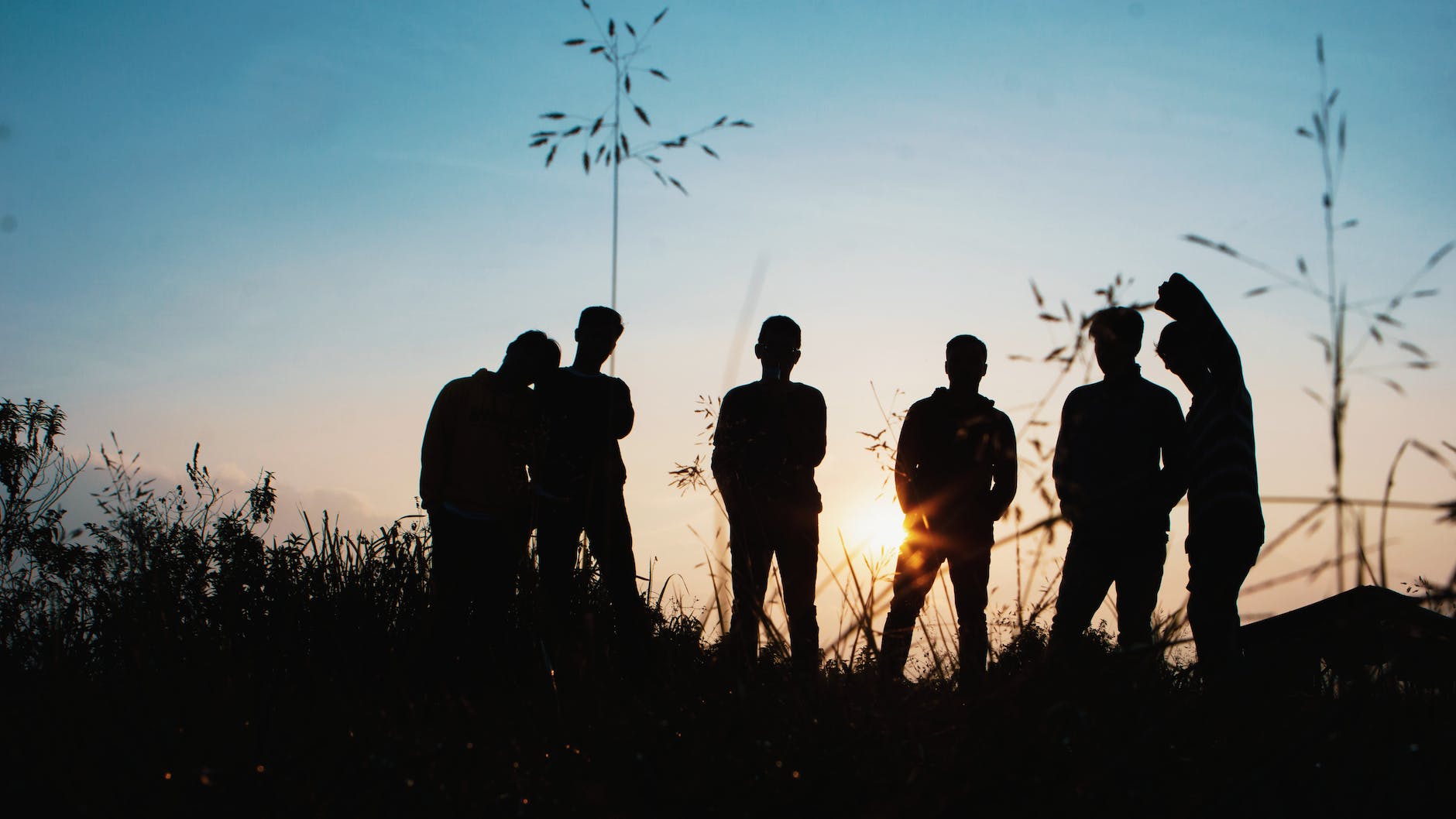
Photo by Afta Putta Gunawan on Pexels.com

Andrew Tate is a grifter. He is a snake oil salesman. He is a caricature and an opportunist. And he has a significant chunk of young men eating out of the palm of his hand.

Sadly, Tate is not alone, with an increasing number of influencers (mostly men, but including some women) joining the Manosphere and espousing a return to ‘traditional values’ and decrying the ‘hypergamous’ nature of ‘modern women’ that has apparently destroyed the social fabric of our world.

Yes, you may need a glossary. Let’s get some of the terminology out of the way first:

  • Hypergamous: the tendency to date up and across, thus increasing your financial and social status by virtue of your partner. This term is sketchy at best, with limited valid research to back it up, but swathes of anecdotal evidence from impassioned (and frequently rejected) men.
  • Trad wife: a woman, or wife, who adheres to traditional family and gender roles. Think, dinner on the table at 6pm and a drink in the man’s hand as he walks through the door.
  • Alpha, beta etc: a way that men (and occasionally women) seek to classify themselves and their behaviours. They are derived from studies into wolfpack hierarchies which have been soundly debunked by their own author. Many grifters in the space seek to ‘teach’ vulnerable young men how to embody ‘alpha’ qualities and avoid being a ‘beta cucks’ (a cuck is a man who allows women to dictate his behaviour. Sometimes the word ‘simp’ is also used).
  • Sigma: the rarest kind of male… A unicorn if you will (they wouldn’t… beta behaviour, really). They are equal in dominance to an alpha but don’t buy into the social bullshit like alphas do… Apparently.
  • The Manosphere: a collection of social media influencers running blogs, podcasts and social media accounts that promote masculinity, misogyny and stridently oppose feminism.
  • Incel: a person who is in a state of involuntary celibacy – that is they desire sex but are unable to get any. Often, they are young men who cannot see why women do not find them desirable. They blame women’s ‘hypergamous’ nature and suggest that a return to traditional values would ensure women would give them an opportunity.

Spearheaded by the likes of Jordan Peterson for the older crew and Tate for the teenagers and younger men, the popularity of this movement cannot be denied and nor should it. I don’t like what these men are selling but I would be foolish not to interrogate why they have the attention of so many young men.

The reality is that in classrooms, boardrooms, worksites and homes all over the world, messages like Tate’s and Peterson’s are being consumed and lived out. They are damaging. They are dangerous. We need to understand why our young men are increasingly drawn to these ideas.

In some part, its because there are some good messages sprinkled within the dogma. Tate sells an ideal man that is hard-working, driven, strong and brave. Nothing wrong with that until the flip side. To protect, to provide for, women who are not all those things. Women who are weak, stupid, disloyal and opportunistic.

Tate, and Peterson, help validate and rationalise a world that is hostile and unforgiving. They characterise the world as ‘out to get you’. Indeed, Tate is on record saying that we are in fact living in the Matrix, and that he has cracked the code.

The reality is that some of what Tate says is not untrue. It is palatable even. He promotes being motivated. Fine. He promotes fitness and strength. Fine. But underlying that is the sense that these are defensive choices to shield you from attack. And that is a problem.

A compilation of Andrew Tate motivational soundbites

Andrew Tate offers young men a solution to a problem they can’t quite verbalise. Jordan Peterson rationalises a world to young men who are confused and overwhelmed. What are they supposed to be? Who are they supposed to be?

As the mental health statistics and outcomes for men continue to decline, we have to do better, and we have to ask why. It is not good enough to tell boys not to be misogynists and then walk away. The Tates, the Petersons of the world are symptoms. The rise of misogynist ideologies are symptoms.

Too often, when issues are divisive, both sides of an argument just end up yelling at each other. It cannot be denied that the patriarchy has hurt women. It cannot be denied that progress has been made for women and that society is better for it. It cannot be denied that some men have leveraged power for too long and the ledger must be balanced.

But equally, who do our young men turn to? How can they safely and positively express their masculinity? How do they celebrate the things that make them uniquely them, if those traits are masculine ones?

When I go to commercial gyms, I see tight clusters of boys, glancing sidelong at mirrors and moving in packs. The anxiety and showmanship is palpable. This is where our boys are going to forge their identities. Floundering along, with form that is eye-wateringly bad. Staying isolated and insulated. Pray for their spines everyone.

Tate and others have created a world in these kids minds where everyone is out to get them. The system, women, other men. No wonder they are scared. No wonder they desperately flex their biceps and bench press with bizarre urgency. They believe they must create an alpha (or sigma, I’m still confused TBH) identity to be safe. They must be untouchable. Invulnerable.

I’ve seen a term come up recently that I kind of love – rewilding. It refers to fostering relationships with the world around us that we have lost. I have another (very clumsy) one to add to the mix. Re-community-ing. Relearning the sense of safety, trust and mutual support that community offers.

We need to do better for our young men and boys (and society at large, but one rabbit-hole at a time I think). And I think gyms could be a starting place for some of them relearning community.

Imagine a space where they can learn safely to get strong both mentally and physically. A space where community is fostered and shared challenges create stronger connections. A space where men and women equally push hard for what they want. Crossfit gym anyone…

I know gyms aren’t the answer, but I do believe community is. The sense that we strive together and that your identity and who you are is valued by the group, not at risk of being torn down at any second.

That is the antidote to the poison in the manosphere. I’m not saying they should all join a strength and conditioning facility (they should, but so should most people) but they should join a balanced and inclusive community.

The solution, as always, is educating and including.

And I can’t wait to see a system where we effectively teach our young people to build strong minds, strong bodies, and strong connections. I know it will come.

Breathe. Keep moving.
How ya livin’? – 23.1 and 23.2 Reflection

Two workouts down (a sneaky 3rd, but we won’t talk about that Dave Castro). One to go.

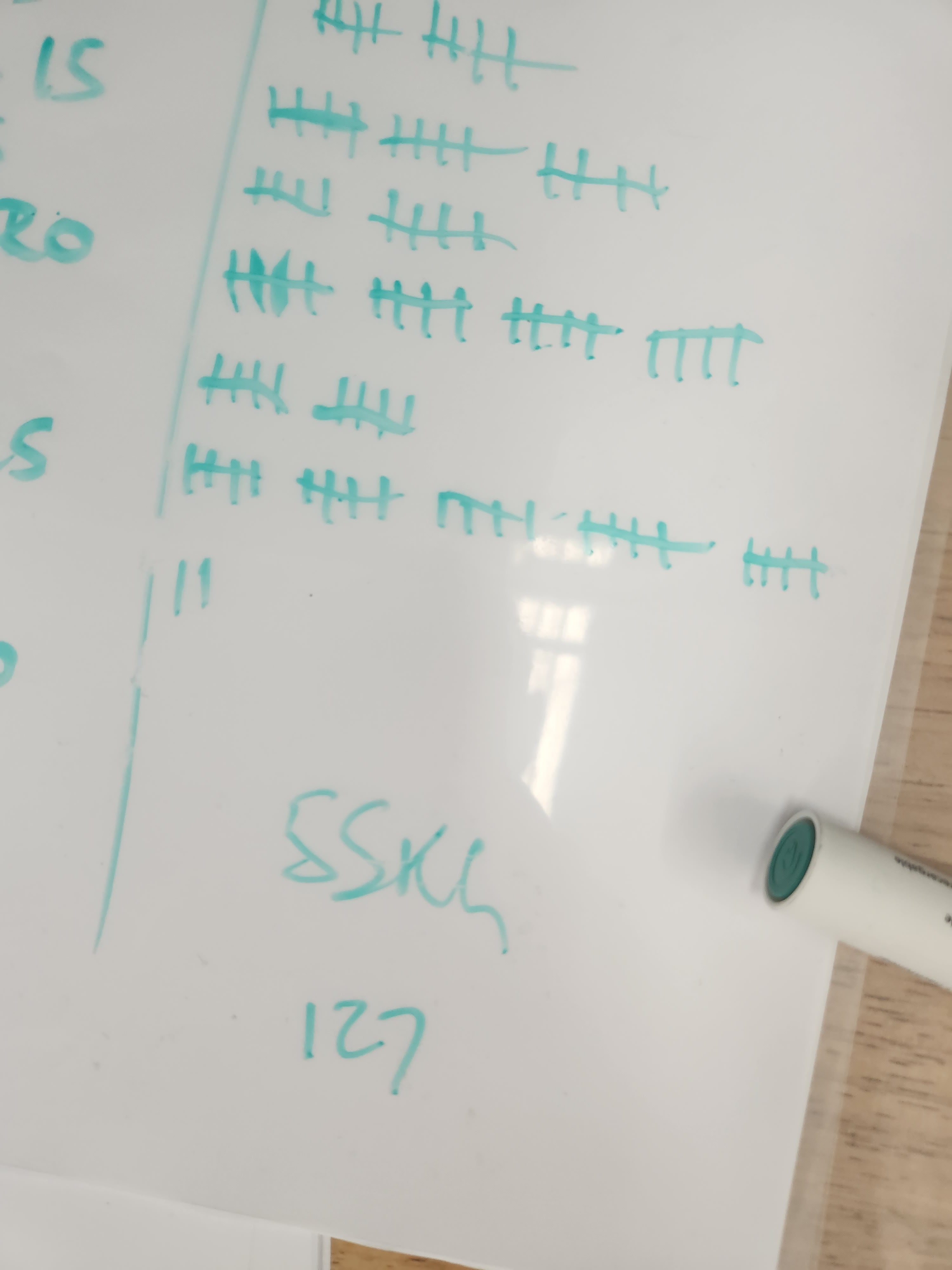
Did you do them? Get your scores in? Check your position on the leader board?

This is the phenomenon of the open – conversations, the predictions, the commiserations, the celebrations. It is the reason I and others push for everyone to get involved. It is a shared experience. A point of connection. A coming together under interesting and unique circumstance. A shared struggle. A shared triumph.

Successful gyms, and successful organisations in general are built and thrive on the back of this connection and community, and its so so powerful. Companies spend untold amounts of money trying to manufacture the sense of camaraderie that comes from sharing a really tough 14-20mins of pain.

So why is it so fucking hard sometimes to show up, to try.

It’s the score. It’s the visibility. It’s the accountability for our result. It’s the thought that people are judging us and weighing our worth on the back of our 1RM thruster or our ability to do toes to bar (bonus points for guessing where my workouts have been…..lacking!). It is the visibility to ourselves and the person we think we are.

Why are we afraid of putting in a score? For our name to be visible on a leader board? To be ranked?

I think it speaks to a deeper fear. A fear of being vulnerable.

Last week I went on camp with the yr 12s from my school. In small groups we tackled some pretty big questions and ideas.

What are your hopes and dreams?

Who are you?

How has your family shaped you and what parts of that might you need to leave behind in order to be happy and fulfilled?

What do you believe?

I didn’t know these kids from a bar of soap, and that was evident from the frostiness of our first session. Why would they open up to me? Why be vulnerable with a stranger?

So I shared.

My hopes – that I would get to know them a bit better. That I would have a less challenging year than last year. That I would be able to embrace opportunities like this one and say YES enthusiastically.

My struggles – missing home since moving to the city. Feeling overwhelmed. Not feeling connected.

My identity – the parts I loved, the parts I was working on and the parts I was conflicted about.

I was vulnerable with them. And it gave them the confidence to start being vulnerable with each other and me.

We slowly started to build a space where being vulnerable and showing up even when it was hard was the expectation. Speak, even if your voice shakes.

We watched this video.

And something shifted. Suddenly talking about the challenges they were facing seemed to come easier. And the listeners were engaged. Less awkward.

You’d be forgiven for thinking these kids (western suburbs, private school) probably don’t relate to real struggle. To what the video touched on.

But to think that is a disservice to them, and to life in general. Life is hard. Life is complicated. And that is a universal experience. Yes, these kids are from privileged backgrounds, but never assume privilege negates struggle. Sometimes, all it does is remove the space to talk about it.

That’s why the video was so powerful. That’s why me sharing was so powerful. It’s the shared struggle that gives us the space to connect, to learn and to grow. It’s recognising the humanity in someone else. Something that someyimes in today’s world can be really hard to see.

On a totally different level, that’s what the open gives us. The shared struggle. The humanity. The connection, the growth.

So, what did I learn from 23.1:

  • 60cal feels a lot like a sprint and a lot like a marathon. In summary, gross. I loved it.
  • T2b are still rubbish. And that’s no one’s fault but mine. Somehow, they’ve gone missing as my pull ups have improved…. They’re on the ‘to improve’ list (again)
  • You can do big sets of wall balls. Especially when there’s only 5mins of a time cap left.
  • Holy fuck, so much pulling!
  • 42.5 feels inconceivably heavy after all the other stuff.
  • Fun, spewy, great start. Let’s do that again (in a while. Not right now)

And 23.2

  • A grind is a joy
  • Shuttles are very deceptive (and I should have gone faster)
  • I 💞💗❤️ burpee pull ups
  • Thruster has improved
  • When it pauses, hold on and push your head through
  • Love love love. Let’s do that again. Right now. Tomorrow.

And I learned I’ve come a really long way since 2022. Not physically perhaps (see t2b…. And overhead position) but mentally and emotionally. My scores were average, but what they don’t show is the intangible training and wins. The last two years have been their own struggle. From battling PTSD, moving, leaving the place and friends I love, starting over. This open feels like a new page after closing a hard chapter. And a fucking empowering one.

There’s power in sharing, power in showing up, power in standing.

Breathe, keep moving.

Xx

Showing up

Sometimes training offers a tiny, sixty minute condensed version of how you show up in life.

Our brains are AMAZING. Thoughts, emotions, actions, movements, interactions – all at the speed of light, electrical pulses branching through infinitely intricate wiring (that occasionally misfire when mid-wod maths are involved…).

They help us, demand even, that we run most of our lives on autopilot. If we interrogated every step we took, if we had to decide the yes, no, maybe of each action we took, we would be exhausted. More than exhausted. We would be paralysed.

Sometimes, though, we invited this paralysis. Not consciously but by opening the flood gates to over-analysing the rightness of an event, action or situation.

Take, for instance, the ‘when I’m fit’ exercise starter. Anyone who is in a group fitness community – CrossFit or the like – has no doubt heard a line something like this:

Oh I’ll start [insert group training style here] when I’m a bit fitter.

I’ll be there when I’m in shape!

I’ll give myself the next six months to get fit enough to join.

And the inevitable:

Wow. Wish I’d started sooner!

We know, and they realise, that there is never a right time to start – you will always be ‘fit enough’ and conversely ‘not fit enough’. And that starting, wherever you are on your journey, is almost always a net positive. That just by showing up you have already taken the biggest and most important step forward and given yourself momentum for a bunch more positive steps.

How strange that our brains limit us from taking the next positive step? What are they protecting us from?

As adults, we tend to avoid sucking at stuff. We’ve done our time being awkward, and not very good at things through our childhood and teens and our adult autonomy offers us the opportunity to avoid being at the bottom of a learning ladder most of the time. I think it is this that we are avoiding. We want to privately get to a point where we (believe we) are proficient and THEN we are happy to go public.

We are dodging the exact thing that we encourage in our young people. Show up. Try. Fail. Learn. Get better.

And it’s SUCH a powerful journey. It is how we grow. It is how we stay humble. It is how we connect. It is how we foster success. It is how we practice resilience.

The Open is a huge opportunity for this, and one that a lot of us tap out of. We take the plunge. We start training. We become comfortable in our classes, surrounded by our people. Workouts are tough, but its our new normal. The open rolls around and… next year. When I’m fitter. When I’ve perfected my clean. When I can muscle up (lol…).

The open is new, unknown and very very visible. You are seen, judged, and scored against a global standard. It is nerve wracking. It is scary. And it is everything we should be searching for. The challenge, the step outside the comfort zone. The opportunity to show up and put yourself and your training on the line.

It is confronting. But that’s where the magic happens. We want our kids to learn these things:

Sometimes things are hard. And you know what? If you fail you’ll be ok.

You are stronger than you know, you have more to give when things get tough and you will rise higher when you allow yourself to be lifted by a community.

When we fall short, it is an opportunity to learn and do better.

But sometimes as adults we tap out of these lessons. And we should keep learning them forever.

For me, this open is going to be tough. I haven’t been as consistent as I wanted. I haven’t ticked off a bunch of skills I had hoped to (muscle ups, wall walks, handstand push ups, looking at you!). Fitting in the workouts is going to be a spanner in my weekend routine. But its going to be an opportunity to see where I’m at. To challenge myself. To take a little reality check. To put myself in an uncomfortable position and learn how to be ok with it. To be better in the future.

And I love it. I love the anticipation. The pressure. I love celebrating other people as they clear hurdles they never thought they could. These are practices and lessons that are so integral in the gym and outside. And I’m so grateful for the opportunity.

The open is one opportunity, and it isn’t right for everyone (even though I love it and think everyone should do it #crossfitkoolaid… I know, I know). But let’s find opportunities to show up, be confronted, be challenged and learn. Let’s put into practice the lessons we want our young people to learn. Let’s be role models and life longer learners.

For the love of the work.

For the love of the challenge.

For the love of the learning.

Keep showing up xx

Wednesday’s Workout and reshaping attitudes

Language matters and one little phrase was an insight into my attitude towards Wednesday’s workout.

Wednesday was a challenging workout for me. Of the five elements across two parts, I liked two. There were rope climbs (yay!), deadlifts (hmmm), farmer’s carries ( 😦 ), wall balls (…) and running (yay!). I had looked at the workout in advance and played a number of mind games to delay and maybe even skip the session. I missed the 9:30am session and so ended up at the midday class. It was warm. I was hungry.

After being absolutely destroyed by yr 7s on an obstacle course. Still a better time than this workout.

The first part of the workout was rope climbs, deadlifts and carries. I love rope climbs, but don’t love the other two. I find them really tough. They are things I have neglected and they expose weaknesses I haven’t chosen to address. As the workout progressed, the deads and carries both impacted my ability to climb the ropes quickly and efficiently. My attitude steadily went downhill. I rested longer, I broke the deadlifts up more, my internal AND external commentary was negative.

Photo by Victor Freitas on Pexels.com

If I had taken the time in the morning to set myself up for a better session – become aware of my attitude, eaten a little more, made the 9:30 session – I would have been in a position to attack the workout better. I hadn’t. And by the time I got to part two, I was over it.

The workout:

200m run, 40 wall balls, 200m run, 40 wall balls, 200m run

Time Cap: 8 mintues.

And then it happened. The coach said ‘ok guys, goal is 7 minutes’ and I responded with:

Ugh, I can’t

Kempen, after feeling defeated by 12.5kg farmer’s carries.

Immediately, I felt intense guilt.

How DISAPPOINTING. Who IS this ‘I can’t‘ person? Where had this come from?

The truth was it had been brewing since the night before, when I saw high(ish) volume wall balls and farmer’s carries. It had been compounded by putting off training, not eating properly and, most importantly, by my negative internal commentary that I did not address or re-direct.

How many minutes?? (Eagle’s Heritage)

I finished the workout in 7:08. I have no doubt that a better approach and mindset would have seen me achieve the goal that the coach had set for me. One less set on the wall balls, a little faster across all the runs, less transition time. Any one of these things would have seen me sub-7mins, but the insidious “I can’t” at the start made it immediately out of reach.

So – lessons for next time:

  • Plan which session you want to train in and stick to it. Had I committed to 9:30 there would have been less time to let negativity grow.
  • Identify the challenging movements. Plan to execute mindfully and sustainably. In the future, I need to think more about my loading on challenging movements and breaking up reps so I can validate some success rather than feeling buried.
  • Try to keep thought patterns in the actionable and positive. Instead of “I can’t”, what would have been more helpful would be thinking about my pacing and how I wanted to break up the wall balls to give me the best chance of success.

Training is a privilege. The pain cave is a choice.

Happy training 🙂